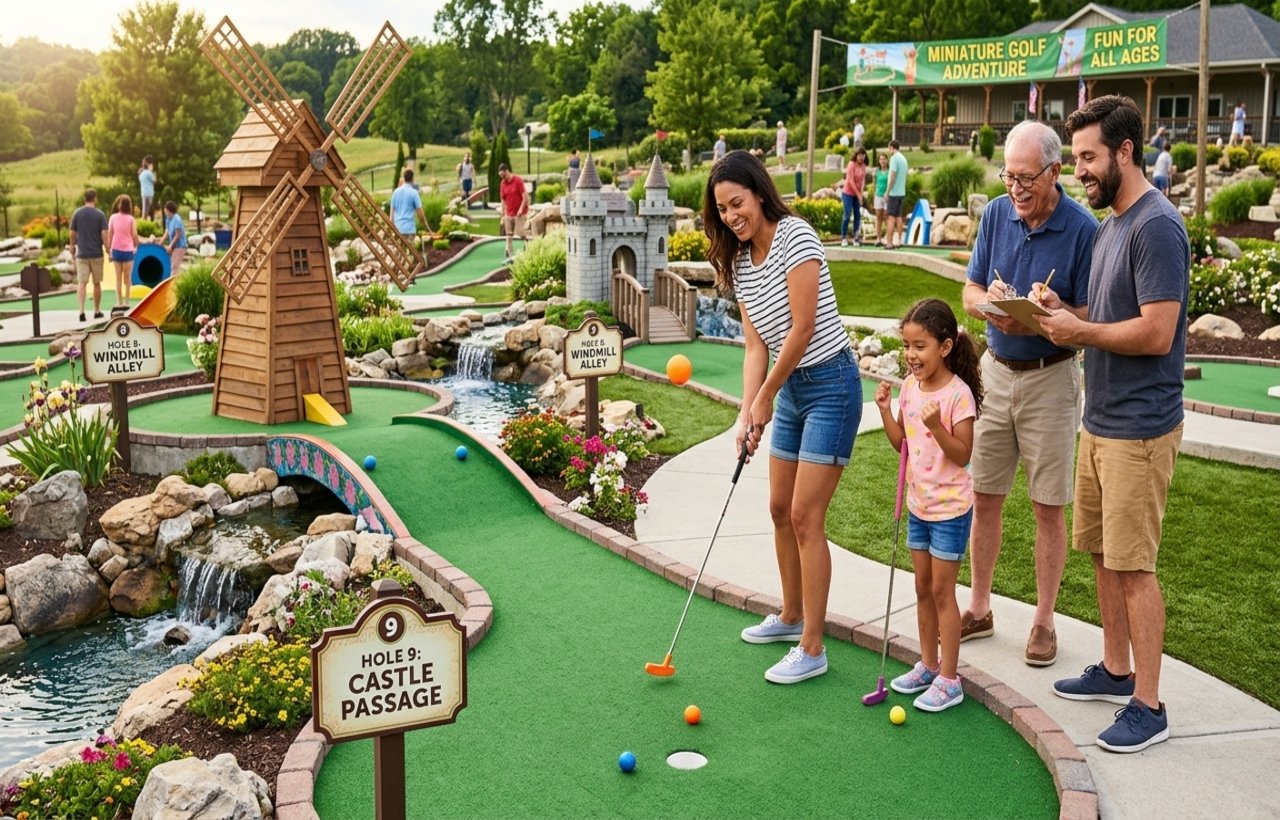
Miniature golf games offer an exciting way to enjoy friendly competition, test your putting skills, and spend quality time with friends and family. Whether you visit a colorful outdoor course, play at an indoor entertainment center, or create a small putting area at home, miniature golf brings entertainment to people of all ages. Unlike traditional golf, you do not need expensive equipment, professional training, or a large playing field. You simply need a putter, a golf ball, and a little patience.
From creative obstacles and tricky slopes to exciting themed courses, this activity turns an ordinary game into an unforgettable experience. Beginners can enjoy simple holes, while experienced players can challenge themselves with difficult angles and creative shots. In this guide, we will explore different types of games, basic rules, creative challenges, and useful tips to make every round more enjoyable.
What Are Miniature Golf Games?
Miniature golf is a recreational sport where players use a putter to hit a small golf ball into a hole using as few strokes as possible. Courses usually feature shorter holes, artificial grass, ramps, tunnels, curves, and decorative obstacles.
Unlike traditional golf, players do not need to cover large distances between holes. Most courses offer 9 or 18 holes, and each hole includes a different layout that tests accuracy and control.
The main goal of miniature golf games is to complete every hole with the lowest possible score. Players take turns hitting their balls and record their strokes throughout the round.
These activities suit children, teenagers, adults, and even older players. Their simple rules make them accessible, while their creative designs keep every round interesting.
Why Are Miniature Golf Games So Popular?
Mini golf continues to attract people because it combines entertainment, skill, and social interaction. You can enjoy it during family outings, birthday parties, holidays, and casual weekend activities.
Here are some reasons people love this activity.
Fun for All Age Groups
One of the biggest advantages is that almost anyone can participate. Children can learn basic putting techniques, while adults can enjoy friendly competition.
Easy to Learn
You do not need previous golfing experience. Most players understand the basic rules within a few minutes, making the activity perfect for beginners.
Encourages Friendly Competition
Playing against friends or family adds excitement to every hole. Everyone tries to achieve the lowest score, which creates entertaining moments and memorable experiences.
Improves Concentration and Coordination
Players must focus on distance, direction, and ball movement. Regular practice can help develop hand-eye coordination, patience, and concentration.
Suitable for Different Occasions
You can enjoy miniature golf during family gatherings, school events, birthday celebrations, and casual dates.
Different Types of Miniature Golf Games
Not every mini golf experience feels the same. Different formats introduce unique challenges and make each round more exciting.
Classic Mini Golf
Mini golf follows traditional putting rules. Players move through different holes and try to complete each one using the fewest strokes.
Courses often include simple ramps, curves, tunnels, and small barriers. This format works particularly well for beginners who want to understand the basics.
Indoor Mini Golf
Indoor courses allow people to enjoy the activity regardless of weather conditions. Many entertainment centers use colorful lights, creative decorations, and imaginative themes.
These miniature golf games provide a comfortable environment for families and groups of friends.
Outdoor Mini Golf
Outdoor courses create a different experience with natural surroundings, fresh air, and decorative landscapes.
Some locations include water features, artificial mountains, bridges, and challenging slopes. Outdoor courses are especially enjoyable during pleasant weather.
Glow-in-the-Dark Mini Golf
Glow-in-the-dark mini golf adds a special visual experience. Courses use fluorescent decorations, glowing golf balls, and colorful lighting.
This format creates an exciting atmosphere for evening entertainment, birthday celebrations, and group activities.
Themed Mini Golf
Themed courses feature creative designs inspired by different environments, such as jungles, oceans, castles, dinosaurs, and space adventures.
Every hole introduces a different visual experience, making the activity more entertaining for children and adults.
Best Miniature Golf Games and Creative Challenges
If you want to make your next mini golf session more exciting, try introducing special challenges. These ideas add variety and encourage players to improve their skills.
One-Shot Challenge
Each player gets one attempt to complete a hole. The player who gets closest to the hole or successfully scores receives the points.
This challenge tests accuracy and creates exciting competition.
Longest Putt Challenge
Choose a suitable practice area and see who can successfully putt the ball from the longest distance.
Players must control their strength because hitting the ball too hard can make it miss the target.
Obstacle Challenge
Create a course using safe obstacles such as cardboard tunnels, plastic cups, and small ramps.
Players must find the best angle to move their balls around or through each obstacle.
Team Mini Golf
Divide players into two or more teams. Each team member takes a turn, and the group combines its scores.
Team-based miniature golf games encourage communication and make the activity more social.
Speed Putting Challenge
Set a reasonable time limit and challenge players to complete a practice hole as quickly as possible.
However, players should maintain control instead of sacrificing accuracy for speed.
Trick Shot Challenge
Invite participants to attempt creative shots using different angles and positions.
You can award bonus points for successful shots, but always follow the course’s safety rules.
Basic Rules of Miniature Golf
Understanding the rules makes the experience fair and enjoyable for everyone.
Here are some common rules followed at many mini golf courses:
- Each player uses a putter and a designated golf ball.
- Players take turns hitting their balls toward the hole.
- The objective is to complete each hole using the fewest strokes.
- Every stroke counts toward the player’s total score.
- Players should wait until the playing area is clear before taking a shot.
- Most courses set a maximum stroke limit for each hole.
- Players should avoid touching another person’s ball unless the course rules allow it.
Some courses have additional rules, so always check the instructions before starting.
How to Improve Your Mini Golf Skills
You do not need professional golfing experience to become a better player. A few simple techniques can improve your performance.
Focus on Your Aim
Before hitting the ball, look carefully at the hole and identify the best path. Pay attention to slopes, curves, and obstacles.
Control Your Putting Strength
Applying too much force can send the ball past the target. Use gentle, controlled movements to improve accuracy.
Maintain a Comfortable Position
Stand comfortably with your feet balanced and your eyes focused on the ball. Keep your movements steady throughout the shot.
Practice Different Angles
Some holes require players to hit the ball around corners or against angled barriers. Practice different approaches to understand how the ball moves.
Stay Patient
Missing a shot does not mean you cannot win. Take your time, learn from mistakes, and focus on the next opportunity.
How to Create Mini Golf at Home
You do not need to visit an entertainment center to enjoy miniature golf games. You can create a simple putting course using household materials.
Start by selecting a flat area in your garden, garage, or living room. Make sure the space provides enough room for safe movement.
Follow these steps:
- Choose a Playing Area: Find a suitable space with enough room for several holes.
- Create the Holes: Use plastic cups or small containers as targets.
- Build Obstacles: Add cardboard tunnels, books, or safe household objects.
- Make Simple Ramps: Use sturdy cardboard to create different slopes.
- Prepare Equipment: Arrange a suitable putter and lightweight practice balls.
- Set the Rules: Decide how many strokes players can take on each hole.
- Start Playing: Take turns and record everyone’s scores.
Home courses allow you to experiment with new layouts and create personalized challenges.
Miniature Golf Games for Kids and Families
Mini golf offers a wonderful opportunity for families to spend time together. Parents can introduce children to simple putting techniques while encouraging them to enjoy the activity.
For younger children, use shorter distances and larger targets. Colorful obstacles and simple challenges can make the experience more interesting.
Families can also introduce small rewards for achievements such as the longest successful putt, the most accurate shot, or the best improvement.
These activities help children develop patience, coordination, and confidence while enjoying quality family time.
Best Tips for Organizing a Mini Golf Party
Planning a mini golf party can turn a regular gathering into an entertaining event.
Consider these ideas when organizing your next celebration:
- Choose a suitable indoor or outdoor location.
- Invite friends and family members of different ages.
- Divide participants into small groups.
- Prepare a simple scorecard for every player.
- Introduce creative challenges between rounds.
- Arrange small prizes for winners.
- Take photographs to capture memorable moments.
You can also decorate your playing area with colorful balloons, themed signs, and creative obstacles.
Are Miniature Golf Games Good for Exercise?
Mini golf is not as physically demanding as traditional golf or other competitive sports. However, it still involves walking, standing, bending, and repeated putting movements.
A typical round can encourage light physical activity while giving players an opportunity to spend time outdoors.
It also challenges mental focus because players must evaluate angles, distance, and ball movement before each shot.
Although it should not replace a complete fitness routine, miniature golf games can add enjoyable movement to your leisure time.
Common Mistakes to Avoid While Playing
Beginners sometimes make simple mistakes that affect their scores. Understanding these problems can help you improve.
Hitting the ball too hard: Excessive force can make the ball travel beyond the hole. Use controlled movements instead.
Ignoring the course layout: Always study the obstacles and slopes before taking a shot.
Rushing your turn: Take enough time to understand the best direction.
Standing incorrectly: An uncomfortable position can reduce accuracy and consistency.
Forgetting the score: Record every stroke carefully to avoid confusion at the end of the game.
Avoiding these mistakes can make your next round more enjoyable and competitive.
The Future of Mini Golf Entertainment
Mini golf continues to evolve as entertainment centers introduce modern designs and interactive experiences. Technology, creative lighting, themed environments, and digital scorekeeping are changing how people enjoy the activity.
Some modern venues combine mini golf with restaurants, music, arcade games, and social entertainment. These additions attract visitors looking for more than a traditional putting experience.
As entertainment trends continue to change, miniature golf games will likely remain an appealing choice for families, friends, and casual sports enthusiasts.
Frequently Asked Questions (FAQs)
1. What are miniature golf games?
They are recreational putting activities where players hit a golf ball toward a small hole using a putter. The goal is to finish each hole with the fewest strokes.
2. How many holes does a mini golf course have?
Most traditional courses feature 9 or 18 holes, although some entertainment venues offer different layouts.
3. Are miniature golf games suitable for children?
Yes. Children can enjoy mini golf because the basic rules are simple, and many courses offer colorful obstacles and beginner-friendly holes.
4. What equipment do you need to play mini golf?
You generally need a putter and a golf ball. Most commercial courses provide the necessary equipment when you purchase a playing session.
5. Can I create a mini golf course at home?
Yes. You can use cardboard, plastic cups, small ramps, and safe household objects to create a simple homemade course.
6. How can I win at mini golf?
Focus on accuracy, control your putting strength, study obstacles, and practice different angles. Consistency is more important than hitting the ball hard.
7. Are indoor and outdoor mini golf different?
Indoor courses operate inside entertainment venues and often use creative lighting. Outdoor courses provide open-air environments with different landscapes and obstacles.
8. Do miniature golf games require experience?
No. Beginners can participate without previous experience. Learning the basic rules and practicing a few shots is usually enough to get started.
Conclusion
Mini golf offers much more than a simple putting activity. It combines creativity, friendly competition, concentration, and entertainment in an experience that people of different ages can enjoy.
From classic courses and glow-in-the-dark adventures to homemade challenges and family competitions, there are countless ways to make every round memorable.
Whether you want to improve your putting skills, organize a fun party, or enjoy a relaxing weekend activity, miniature golf provides an accessible and entertaining option. Grab a putter, choose your favorite course, and see how many holes you can complete with the lowest score!