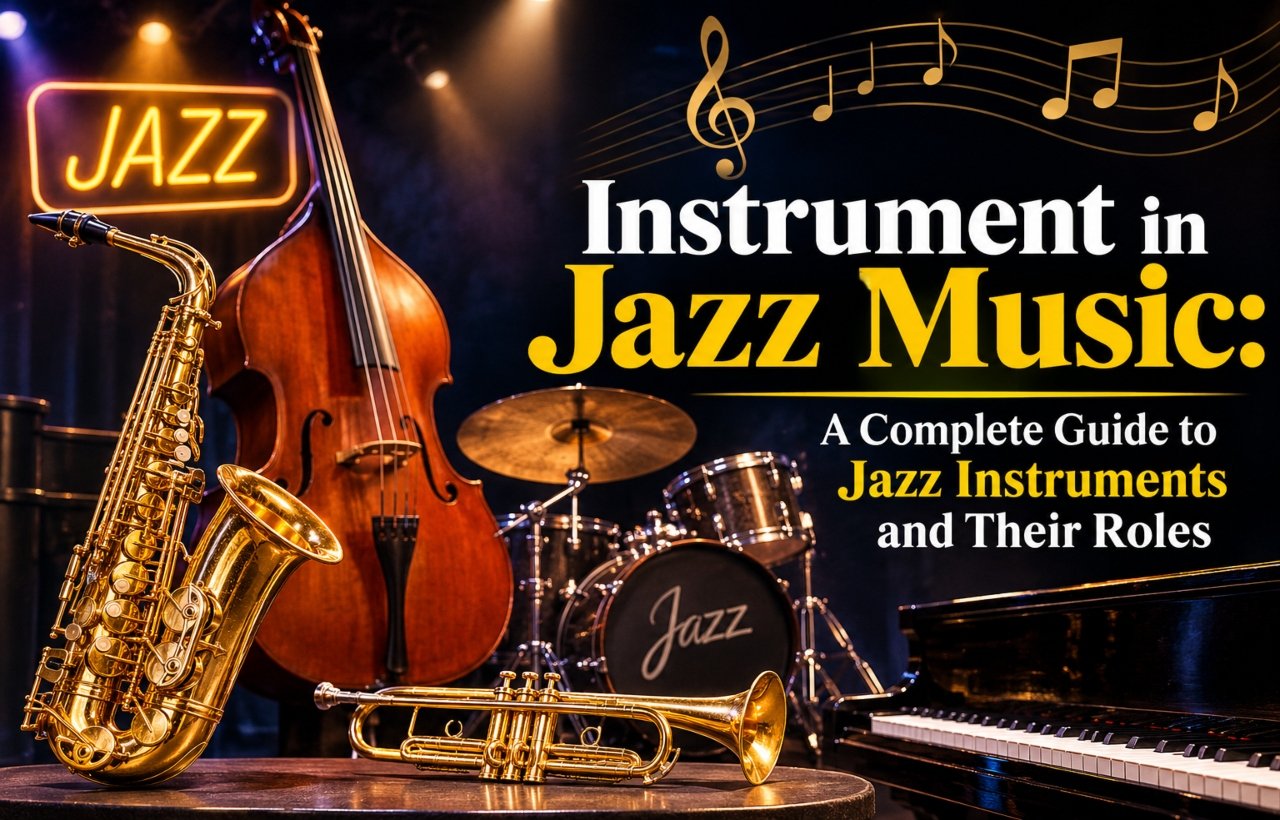
What Is an Instrument in Jazz Music?
Jazz is one of the most expressive and creative musical genres in the world. It combines rhythm, melody, harmony, improvisation, and individual musical expression to create sounds that can be exciting, emotional, relaxing, or energetic. An instrument in jazz music is any musical instrument used to produce these sounds and contribute to a jazz performance. Some instruments carry the main melody, others create harmonies, and some provide the rhythmic foundation that keeps the entire performance moving.
Unlike many other musical genres, jazz does not follow one fixed arrangement of instruments. A jazz performance can feature a single piano player, a small group of musicians, or a large orchestra with dozens of performers. The instruments also depend on the particular jazz style. For example, traditional New Orleans jazz often features trumpet, clarinet, trombone, banjo, tuba, and drums, while modern jazz groups frequently use saxophones, electric guitars, keyboards, and electronic instruments. Each combination creates a different musical atmosphere.
One interesting feature of jazz is improvisation. Musicians often create new melodies while performing instead of following every note from a written musical arrangement. This allows instrumentalists to express their personalities and musical ideas. A saxophonist might play a smooth and emotional solo, while a drummer responds with exciting rhythmic patterns. The piano player may introduce unexpected chords that completely change the mood.
Jazz instruments also have individual responsibilities within an ensemble. The trumpet and saxophone commonly perform melodies and solos, while the piano and guitar provide harmonic support. The bass and drums create the groove that connects everything. According to educational resources from Jazz in America, the particular sound and tone of an individual musician are just as important as the instrument itself.
The Most Popular Instruments Used in Jazz
Jazz musicians use instruments from several musical families, including brass, woodwind, percussion, and string instruments. Some have become strongly associated with jazz because of their expressive sounds and ability to perform improvisational melodies. Understanding their individual characteristics makes it easier to appreciate how jazz music is created.
1. Saxophone
The saxophone is one of the most recognizable and influential instruments in jazz music. Its expressive sound can be soft and emotional or powerful and energetic, making it suitable for many different jazz styles. Although saxophones are usually made from brass, they belong to the woodwind family because they produce sound through a vibrating reed attached to a mouthpiece.
There are several types of saxophones used in jazz, including soprano, alto, tenor, and baritone. Each has a different pitch range and sound character. The alto saxophone produces a bright and flexible tone, while the tenor saxophone offers a deeper, fuller sound. The soprano saxophone has a higher and often sharper tone, whereas the baritone saxophone produces rich, low notes.
Saxophonists frequently perform the main melody and take extended improvisational solos. They use techniques such as vibrato, bending notes, changing dynamics, and controlling breath to create expressive musical phrases. These techniques allow performers to make their instruments sound almost like human voices.
Famous jazz saxophonists such as Charlie Parker, John Coltrane, and Sonny Rollins helped establish the saxophone as a central instrument in jazz history. Their performances continue to inspire musicians who want to explore improvisation and develop their own musical identities.
2. Trumpet
The trumpet is another essential instrument in jazz. It belongs to the brass family and creates sound when a musician vibrates their lips against a mouthpiece. Its bright, powerful, and projecting tone makes it especially effective for leading melodies and performing energetic solos.
Trumpet players can produce a wide range of sounds by changing their lip pressure, breathing technique, and use of valves. They can perform high, exciting notes that attract attention or play soft and warm melodies that create a relaxing atmosphere. Some musicians also use mutes to change the trumpet’s sound. Different mutes can produce distinctive effects, from muted and intimate tones to sharper, unusual sounds.
The trumpet became particularly important during the early development of jazz in New Orleans. Musicians used it to lead ensemble melodies and communicate musical ideas with other performers. As jazz developed, trumpet players gained more opportunities to perform individual solos.
Louis Armstrong and Miles Davis are two legendary trumpet players who transformed jazz through their creativity and distinctive playing styles. Armstrong helped popularize instrumental improvisation, while Davis explored several jazz movements, including cool jazz and jazz fusion. Their contributions demonstrate why the trumpet remains an important instrument in jazz music.
3. Trombone
The trombone is a brass instrument recognized by its long sliding tube. Unlike the trumpet, which uses valves, the trombone generally changes pitch through a movable slide. This feature allows musicians to move smoothly between notes and create expressive musical effects.
In jazz ensembles, the trombone often provides lower melodic lines and supports the harmony created by trumpets and saxophones. Its warm, rich tone gives jazz arrangements extra depth. It can also produce powerful accents that make ensemble performances sound more energetic.
One distinctive characteristic of the trombone is its ability to create glissando effects. A glissando happens when a musician moves smoothly from one pitch to another instead of playing separate notes. This technique can give jazz performances a playful and entertaining character.
Trombone players are particularly important in traditional jazz, swing, and big-band arrangements. They often perform musical responses to trumpets and saxophones, creating conversations between different instrument sections. Famous trombonists such as J.J. Johnson and Jack Teagarden helped demonstrate the instrument’s possibilities as both an ensemble and solo instrument.
4. Piano
The piano plays a major role in jazz because it can produce both melody and harmony. Unlike many instruments, a piano allows one musician to play several notes simultaneously, making it extremely useful for creating chords, bass patterns, and complex musical arrangements.
In a traditional jazz group, the pianist usually supports the main melody by playing chords and rhythmic patterns. These chords provide the harmonic structure that allows other musicians to improvise. However, piano players are not limited to accompaniment. They regularly perform solos that demonstrate their creativity, technical ability, and understanding of jazz harmony.
Jazz piano has developed through several musical styles. Early ragtime introduced syncopated piano patterns, while swing musicians developed rhythmic approaches that encouraged dancing. Bebop pianists explored more complicated harmonies and fast improvisational passages. Modern jazz pianists continue experimenting with unusual chord structures and different rhythmic ideas.
Famous jazz pianists include Thelonious Monk, Duke Ellington, Art Tatum, and Bill Evans. Each developed a distinctive approach to the instrument. Monk became famous for unusual harmonies and rhythmic surprises, while Evans explored delicate harmonies and lyrical improvisation.
The piano is also important because it helps musicians communicate during performances. A pianist can change chords, introduce new rhythmic patterns, or leave musical space for another performer.
5. Double Bass
The double bass, also called the upright bass or acoustic bass, provides the low-frequency foundation of many jazz ensembles. It is a large string instrument that musicians usually play while standing or sitting on a stool. Jazz bassists commonly pluck the strings with their fingers, a technique known as pizzicato.
One of the double bass’s most important responsibilities is maintaining the harmonic and rhythmic foundation. In swing and many traditional jazz styles, bassists often play walking bass lines. These lines use regularly moving notes that connect the chords and help the entire band maintain a steady groove.
Although listeners sometimes pay more attention to the saxophone or trumpet, the bass player performs an equally important job. Without a strong bass foundation, the music can lose its direction and rhythmic stability. The bassist also communicates with the drummer to maintain the performance’s overall feel.
Bass players can perform solos, melodic passages, and rhythmic variations. They may also use bowing techniques to produce sustained notes instead of plucking the strings.
Paul Chambers, Charles Mingus, and Ray Brown are respected jazz bassists whose performances demonstrate the instrument’s musical importance.
6. Drums
Drums are essential to the rhythmic identity of jazz. A jazz drum kit typically includes a bass drum, snare drum, toms, hi-hat, and cymbals. The drummer uses different combinations of these components to create rhythmic patterns, accents, fills, and musical transitions.
Unlike some musical genres where drums mainly provide a repeated beat, jazz drumming often involves continuous interaction with other musicians. A drummer might maintain a swinging rhythm on the ride cymbal while using the snare drum to introduce unexpected accents. These small variations help make every performance feel alive.
Jazz drummers also use brushes instead of traditional drumsticks in certain styles. Brushes create a softer, smoother sound that works particularly well for ballads and intimate performances. Sticks generally produce a stronger attack and more energetic sound.
The drummer’s relationship with the bassist is especially important. Together, they establish the groove and help the ensemble maintain its rhythmic direction. However, the drummer can also respond to a soloist by changing the intensity or adding rhythmic ideas.
Buddy Rich, Art Blakey, Max Roach, and Elvin Jones are among the influential drummers in jazz history. Their techniques helped expand the possibilities of percussion in jazz.
7. Jazz Guitar
The guitar brings a distinctive sound to jazz performances. It can provide rhythmic accompaniment, play chords, perform melodic lines, and take improvisational solos. Jazz guitarists commonly use hollow-body electric guitars, although acoustic and solid-body electric guitars are also used.
The hollow-body electric guitar became particularly popular because it produces a warm, rounded tone that works well with other jazz instruments. Guitarists often use clean amplification to preserve the instrument’s natural sound.
In many jazz groups, the guitar supports the harmony by playing chords at appropriate moments. It can also create rhythmic patterns that complement the drummer and bassist. During solo sections, guitarists use techniques such as bending, sliding, picking, and vibrato to create expressive melodies.
Wes Montgomery, Django Reinhardt, and Joe Pass are famous examples of influential jazz guitarists. Montgomery became especially recognized for his thumb-based playing technique, while Reinhardt developed an extraordinary approach to jazz guitar despite serious injuries to his left hand.
The guitar is particularly valuable because it can function as both a rhythm and lead instrument. This flexibility allows smaller jazz groups to create rich arrangements without requiring a large number of musicians.
8. Clarinet
The clarinet is a woodwind instrument that produces sound through a single reed attached to a mouthpiece. It has a smooth, flexible tone and can perform both high and low musical passages. Its expressive range made it especially important during the early development of jazz.
Clarinet players frequently perform melodic lines, decorative musical phrases, and improvisational solos. The instrument can move quickly between notes, which makes it suitable for energetic traditional jazz performances.
During the New Orleans and Dixieland periods, clarinet was one of the leading melodic instruments. It often played a counter-melody alongside trumpet and trombone. This created a lively musical texture in which several instruments performed different melodic ideas simultaneously.
Benny Goodman, Sidney Bechet, and Barney Bigard are well-known musicians associated with jazz clarinet. Goodman became particularly famous during the swing era and helped introduce jazz to wider audiences.
Although the clarinet is less dominant in some modern jazz styles, it remains an important part of the genre’s musical heritage.
Other Instruments Found in Jazz Music
Jazz is not restricted to a small collection of traditional instruments. Musicians have continuously introduced new sounds and experimented with different musical combinations. Several less traditional instruments have become important in particular jazz styles.
Vibraphone, Flute, Organ, and Violin
Vibraphone: The vibraphone is a percussion instrument consisting of metal bars arranged like a keyboard. Musicians strike the bars with mallets to produce clear, ringing tones. Its sound is bright and atmospheric, making it suitable for melodies, chords, and solos. Lionel Hampton and Milt Jackson helped establish the vibraphone as an important jazz instrument.
Flute: The flute produces sound when air is directed across an opening in the instrument. It creates a light, clear tone that can add a different musical texture to jazz arrangements. Jazz musicians often use it for melodic solos and expressive passages. Herbie Mann and Hubert Laws are notable jazz flute performers.
Organ: The Hammond organ became particularly popular in soul jazz and other styles. It produces sustained musical tones and allows performers to create bass lines, chords, and melodies. Jimmy Smith was one of the most influential jazz organists.
Violin: Although more commonly associated with classical music, the violin also has a place in jazz. It can produce fast melodies, expressive solos, and unusual rhythmic patterns. Stéphane Grappelli helped popularize jazz violin through his work with the Quintette du Hot Club de France.
These instruments show how jazz continues to welcome different musical sounds and creative approaches.
9. Human Voice and Scat Singing
The human voice is another important part of jazz. Jazz singers use their voices to perform melodies, interpret lyrics, and communicate emotions. Some vocalists also improvise in ways that resemble instrumental solos.
One particularly interesting jazz technique is scat singing. It involves using improvised syllables and sounds instead of conventional lyrics. Singers create rhythmic and melodic phrases using their voices almost like saxophones or trumpets.
Scat singing requires a strong understanding of rhythm, pitch, and improvisation. It also allows vocalists to experiment with sounds and develop an individual musical identity.
Ella Fitzgerald and Louis Armstrong are famous examples of jazz artists who demonstrated the creative possibilities of vocal improvisation.
How Jazz Instruments Work Together
Jazz instruments become particularly interesting when musicians perform together. Each instrument has its own responsibilities, but the real magic happens through interaction. A jazz ensemble usually combines a front line with a rhythm section, although the exact arrangement depends on the group.
The front line generally includes melodic instruments such as trumpet, saxophone, and trombone. These musicians often perform the main theme and take improvisational solos. The rhythm section usually contains piano or guitar, bass, and drums. It provides the harmonic and rhythmic foundation that supports the melodic performers.
Consider a typical jazz quartet featuring saxophone, piano, double bass, and drums. The saxophone begins by introducing the melody. The piano plays chords underneath it, while the bassist creates a walking bass line. The drummer establishes the swing feel through cymbal patterns and rhythmic accents. When the saxophone finishes its main melody, the pianist might take a solo while the other musicians continue supporting the performance.
This arrangement shows that jazz is a conversation, not a collection of unrelated sounds. Musicians listen carefully to each other and adjust their playing according to what happens during the performance.
Sometimes a drummer changes the rhythm to respond to a soloist. A bassist might introduce a different melodic idea, while the pianist adjusts the harmony. These interactions create musical surprises and make live jazz performances unique.
Instruments Used in Different Jazz Styles
Different jazz styles often use different combinations of instruments. The genre has developed over many decades, and each movement introduced new sounds, techniques, and arrangements.
| Jazz style | Common instruments | Musical characteristics |
|---|---|---|
| Traditional jazz | Trumpet, clarinet, trombone, banjo, tuba, drums | Collective improvisation and lively rhythms |
| Swing jazz | Saxophones, trumpets, trombones, piano, bass, drums | Strong dance rhythms and big-band arrangements |
| Bebop | Trumpet, saxophone, piano, bass, drums | Fast tempos and complex improvisation |
| Cool jazz | Saxophone, trumpet, piano, bass, drums | Relaxed melodies and softer tones |
| Latin jazz | Piano, trumpet, saxophone, congas, timbales, bass | Latin rhythms and jazz improvisation |
| Jazz fusion | Electric guitar, synthesizer, electric bass, drums | Combination of jazz, rock, and electronic sounds |
Traditional and New Orleans Jazz
Traditional jazz developed through musical communities in New Orleans. Early ensembles often featured trumpet, clarinet, trombone, banjo, tuba, and percussion. Musicians frequently played different melodic lines simultaneously, producing an energetic and lively sound.
Swing and Big-Band Jazz
Swing became especially popular during the 1930s and 1940s. Big bands expanded the number of instruments and organized musicians into sections. These groups commonly featured saxophones, trumpets, trombones, piano, guitar, bass, and drums. Their arrangements created powerful sounds suitable for dance halls and large performances.
Bebop and Cool Jazz
Bebop introduced a more complex approach to improvisation. Musicians often performed at faster tempos and explored sophisticated harmonies. Trumpets, saxophones, piano, bass, and drums became important instruments in small bebop groups.
Cool jazz developed a more relaxed musical atmosphere. Musicians explored softer dynamics, unusual arrangements, and different instrumental combinations. Flutes, French horns, and bass clarinets also appeared in certain arrangements.
Latin Jazz and Jazz Fusion
Latin jazz combines jazz improvisation with rhythms from Latin American musical traditions. Instruments such as congas, bongos, timbales, piano, and brass instruments help create its distinctive rhythmic identity.
Jazz fusion brought together jazz with rock and other contemporary musical influences. Electric guitars, electronic keyboards, synthesizers, and amplified bass became increasingly important. This development expanded the possibilities of an instrument in jazz music and introduced new sounds to modern audiences.
How Jazz Instruments Have Changed Over Time
The history of jazz instruments reflects the development of jazz itself. Early jazz musicians worked with the instruments available in their communities, including brass instruments, clarinets, banjos, pianos, and traditional percussion. These combinations helped establish the musical foundation of early jazz.
As jazz became popular in different cities and countries, musicians experimented with new arrangements. Larger bands introduced additional saxophones, trumpets, and trombones. The development of big-band jazz created opportunities for more organized instrumental sections and sophisticated arrangements.
During the bebop period, smaller groups became important again. Instead of relying on large sections of musicians, performers explored individual creativity and complex improvisation. Trumpet, saxophone, piano, bass, and drums became particularly prominent in these groups.
Technology also influenced the instruments used in jazz. Electric amplification allowed guitarists to compete with louder instruments, while electronic keyboards introduced new possibilities for harmony and sound design. Jazz fusion musicians experimented with synthesizers, effects, and amplified instruments.
Today, jazz musicians continue to combine traditional acoustic instruments with modern electronic equipment. Some performers use digital keyboards, looping technology, and electronic percussion, while others prefer the natural sound of acoustic instruments.
This development demonstrates that jazz is not a fixed musical tradition. Its instruments continue evolving as musicians discover new ways to express themselves.
How to Choose an Instrument for Playing Jazz
Learning jazz can be an exciting experience, especially if you enjoy experimenting with music. However, choosing the right instrument in jazz music is an important first step. Your decision should depend on your interests, musical goals, budget, and willingness to practice.
If you enjoy expressive melodies and improvisational solos, the saxophone or trumpet might be a good choice. Both instruments offer excellent opportunities to explore jazz phrasing and develop a distinctive sound. However, beginners should understand that producing a good tone requires regular practice and proper breathing techniques.
If you prefer creating chords and understanding musical harmony, the piano is an excellent option. It allows beginners to see how notes, scales, and chords connect. It is also useful for learning music theory because the keyboard presents musical relationships visually.
People who enjoy rhythm may prefer drums. Learning jazz drumming involves understanding timing, coordination, swing patterns, and musical interaction. The double bass is another excellent choice for people who enjoy creating the foundation of a musical group.
The following comparison can help beginners understand their options.
| Instrument | Best suited for | Beginner consideration |
|---|---|---|
| Saxophone | Melodies and improvisation | Requires breath control and embouchure |
| Trumpet | Bright solos and lead melodies | Requires lip strength and breath support |
| Piano | Chords and musical theory | Requires hand coordination |
| Drums | Rhythm and groove | Requires coordination and timing |
| Double bass | Low notes and rhythmic foundation | Large instrument with physical demands |
| Guitar | Chords and melodic solos | Requires finger coordination |
| Clarinet | Melodies and traditional jazz | Requires reed and breath control |
Regardless of your choice, listening to jazz regularly can improve your musical understanding. Start with simple melodies, learn basic scales, and practice playing along with recordings. You do not need expensive equipment or advanced musical knowledge to begin exploring jazz.
Conclusion
Jazz is a musical tradition built around creativity, rhythm, expression, and communication. Every instrument contributes something different, whether it is the powerful sound of a trumpet, the expressive melodies of a saxophone, the harmonic richness of a piano, or the steady foundation of a double bass and drums.
Understanding an instrument in jazz music helps listeners appreciate how individual musicians work together to create unforgettable performances. From traditional New Orleans ensembles to modern jazz fusion groups, instrumental combinations continue to evolve while preserving the creative spirit of jazz.
Whether you are a beginner, a dedicated music fan, or someone interested in learning about musical history, exploring jazz instruments can open the door to a fascinating world of sounds. The beauty of jazz is that there is always something new to hear, learn, and discover.
Frequently Asked Questions (FAQs)
1. What is the most popular instrument in jazz music?
The saxophone is one of the most recognizable and popular instruments in jazz. Its expressive tone, flexibility, and ability to perform emotional melodies and complex solos make it especially important. Trumpet, piano, and drums are also widely associated with jazz.
2. What are the five main instruments used in jazz?
Five important instruments commonly found in jazz ensembles are saxophone, trumpet, piano, double bass, and drums. Together, they provide melody, harmony, bass lines, and rhythmic support. However, jazz groups can use many other instruments depending on their musical style.
3. Is piano necessary in a jazz band?
No, piano is not necessary in every jazz band. Some groups use guitar or other chordal instruments to provide harmonic support, while others perform without a conventional chordal instrument. Jazz allows musicians to experiment with different combinations.
4. Which instrument is easiest to learn for jazz beginners?
The piano is often a practical starting point because its keyboard makes it easier to understand notes, scales, and chords visually. However, the easiest instrument depends on your interests, practice habits, and previous musical experience.
5. Why are drums important in jazz music?
Drums establish the rhythmic foundation and help create the distinctive swing feel of jazz. They also provide accents, transitions, and musical responses to other performers. A skilled jazz drummer interacts with the entire ensemble rather than simply maintaining a repeated beat.