What Is MC Music Factory Everybody Dance Now?
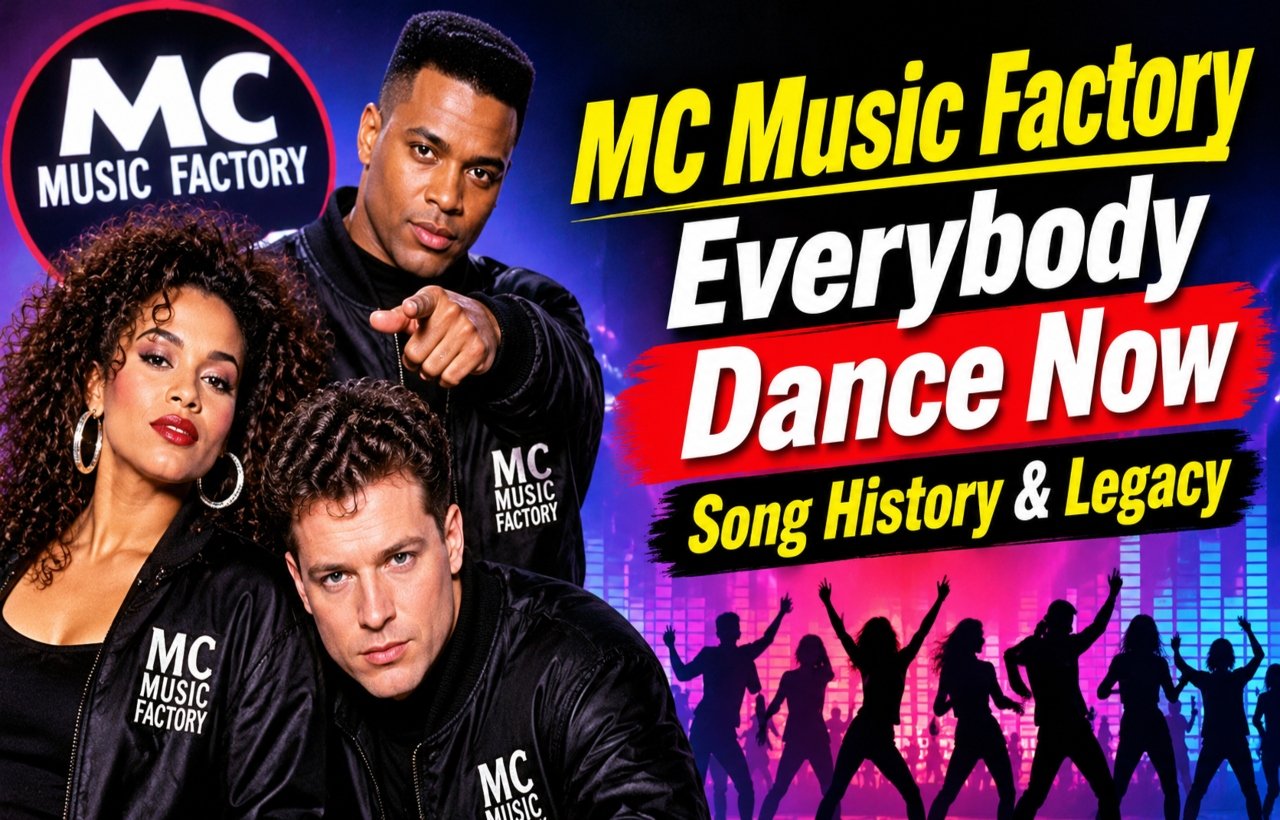
When people search for MC Music Factory Everybody Dance Now, they are usually looking for one of the most recognizable dance songs of the early 1990s. The correct artist name is C+C Music Factory, and the song’s full title is “Gonna Make You Sweat (Everybody Dance Now).” Released in 1990, this energetic track quickly became a worldwide dance sensation. Its powerful rhythm, memorable vocal performance, and exciting production helped it stand out during a period when house and electronic dance music were becoming increasingly popular.
The song is more than just an old club record. It represents an important moment in popular dance music, when producers combined house rhythms, hip-hop influences, funk elements, and powerful vocals to create something that appealed to a much wider audience. Even listeners who cannot remember the original release often recognize its famous opening and energetic atmosphere. Its popularity has continued through movies, television, sporting events, commercials, parties, and online entertainment. The track also helped establish C+C Music Factory as an influential name in mainstream dance music.
For anyone discovering this classic today, the appeal is easy to understand. The production feels immediate, the rhythm encourages movement, and the vocal delivery gives the recording an unmistakable personality. It does not require listeners to understand complicated musical ideas or follow a detailed story. Instead, it creates a shared atmosphere of excitement. That straightforward approach is one reason the song has remained recognizable across generations.
The History Behind Gonna Make You Sweat (Everybody Dance Now)
The history of “Gonna Make You Sweat (Everybody Dance Now)” begins in the late 1980s, when American dance music was developing rapidly. House music had already established a strong following in clubs, particularly through electronic beats, repetitive rhythms, and DJ-driven performances. At the same time, hip-hop, funk, and pop were influencing the direction of commercial music. Producers began experimenting with these different sounds, creating recordings that could work equally well in dance clubs and on mainstream radio.
C+C Music Factory emerged during this exciting period. The production partnership of Robert Clivillés and David Cole became central to the group’s identity. Rather than relying on one traditional band arrangement, they brought together different performers, vocalists, rappers, and studio musicians to create energetic dance records. Their approach reflected the collaborative nature of club culture, where a successful track could depend on the combination of production, performance, rhythm, and atmosphere.
The single was released in October 1990 and became the lead track from the group’s debut album, Gonna Make You Sweat. Columbia Records released the recording, which soon attracted attention from radio stations, dance clubs, and music audiences around the world. By early 1991, it had become a major international success.
How the Song Was Created
The creation of the song is an interesting example of how unexpected decisions can produce major musical success. Robert Clivillés developed the instrumental foundation before the final version took shape. According to historical accounts, the track was initially offered to the New York freestyle group Trilogy, but the group did not record it. Clivillés and Cole subsequently developed it for their own C+C Music Factory project.
The producers understood that a strong dance record needed more than an attractive instrumental. It required a vocal performance capable of matching the energy of the beat. They brought in Martha Wash for the powerful female vocals and Freedom Williams for the rap sections. Their different musical approaches created a contrast that became one of the recording’s most recognizable features.
This combination gave the track a distinctive structure. The female vocal sections delivered powerful melodic energy, while the rap performance added rhythm, personality, and a hip-hop influence. Instead of making the song sound like several unrelated musical styles placed together, the producers connected everything through a consistent dance beat. That balance helped transform the recording into a memorable club anthem.
The People Behind the Hit
A successful song often involves several creative people working together, and this recording is an excellent example. Robert Clivillés and David Cole were the main production figures behind C+C Music Factory. Their work helped shape the group’s energetic sound, which combined electronic dance production with influences from other popular musical styles.
Freedom Williams contributed the rap performance that audiences quickly associated with the track. His delivery gave the recording a recognizable hip-hop character and helped establish its energetic identity. Martha Wash provided the powerful female lead vocals, bringing an impressive vocal presence to the chorus and other melodic sections.
The creative contributions of these performers deserve recognition because the song’s success depended on their combined work. The production established the musical foundation, the rap provided rhythmic personality, and the female vocals delivered the emotional power that made the recording memorable.
The track also became associated with Zelma Davis, who appeared in the music video performing the female vocal sections. However, the video performance and the actual recording vocals were not the same. This distinction later became an important part of the song’s history and the discussion surrounding recognition for recording artists.
Who Sang Everybody Dance Now?
One of the most interesting questions about MC Music Factory Everybody Dance Now concerns the actual singers. Many people initially associate the female performance with the woman shown in the music video. However, the original recording featured Martha Wash, while Freedom Williams performed the rap sections.
Martha Wash was already an established vocalist before working on this recording. Her powerful voice was particularly suited to dance music because she could deliver strong melodic performances that remained clear over energetic instrumental arrangements. Her contribution became one of the defining elements of the song. The famous female vocal sections give the track much of its emotional excitement and make it instantly recognizable.
Freedom Williams played an equally important role. His rap performance added another musical dimension, helping the song connect with the hip-hop influences that were becoming increasingly visible in mainstream dance music. The combination of his rhythmic delivery and Wash’s powerful vocals created a memorable contrast.
Zelma Davis appeared in the music video and became visually associated with the female performance. However, she did not sing the original recorded female vocal parts. The difference between the recording vocalist and the person shown performing on screen eventually led to controversy over proper credit and recognition.
This history is important because successful music should recognize the contributions of the people who actually create and perform it. Martha Wash’s voice remains a central part of the song’s identity, while Freedom Williams’ performance helped make the recording a distinctive dance anthem.
The Meaning Behind Everybody Dance Now
The message behind “Everybody Dance Now” is simple, positive, and universal. The song encourages people to enjoy music, move their bodies, and participate in the excitement of a shared experience. Rather than telling a complicated story, it focuses on the feeling that music can create when people come together.
Dance music often works best when it creates an atmosphere that listeners can immediately understand. This track achieves that through its energetic production and direct vocal delivery. The repeated invitation to dance acts like a signal to the audience, encouraging everyone to become part of the musical experience. It creates the feeling that a party has already started and nobody needs permission to join.
Another reason the message remains effective is that dancing does not require a particular language, background, or level of musical knowledge. People can enjoy the beat without understanding every word. Whether someone hears the recording at a nightclub, family celebration, wedding, or sporting event, its purpose remains clear.
The song also represents the freedom and excitement associated with dance culture. Its energetic atmosphere communicates confidence, movement, and enjoyment. Listeners are encouraged to forget their everyday worries temporarily and focus on the rhythm.
This straightforward message has helped the recording remain relevant. Many popular songs depend heavily on particular trends or cultural moments, but the simple enjoyment of dancing never becomes outdated. That is one of the strongest reasons this classic continues to connect with audiences.
Musical Style and Production
The musical identity of “Gonna Make You Sweat (Everybody Dance Now)” comes from its combination of house music, dance-pop, funk, and hip-hop influences. During the early 1990s, producers were finding new ways to bring underground club sounds into mainstream entertainment. C+C Music Factory successfully used that approach to create a recording that sounded suitable for both professional DJs and everyday listeners.
The track features a strong electronic rhythm that remains consistent throughout the recording. Its beat gives the vocals a solid foundation while allowing the different musical elements to work together. The production also uses layered sounds and energetic arrangements to maintain listener interest.
Rather than relying on complicated instrumental solos, the recording concentrates on rhythm and vocal performance. This approach makes it particularly effective in dance environments, where a steady beat and recognizable musical phrases are often more important than complex arrangements.
The production feels powerful because each element has a clear purpose. The percussion creates movement, the keyboards contribute melodic and harmonic textures, and the vocals provide the personality that distinguishes the recording from other dance tracks of its era.
The Famous Opening and Powerful Beat
One of the most recognizable features of the recording is its opening. The famous vocal introduction immediately establishes the song’s identity, giving listeners a clear indication of the energy that follows. It is a memorable example of how a short musical phrase can become more recognizable than an entire song.
The opening works because it creates anticipation. Before the main rhythmic arrangement develops fully, listeners are already drawn into the performance. This technique is particularly effective in dance music, where the introduction can help build excitement on a dance floor.
The beat then provides the foundation for the rest of the recording. Its strong rhythmic pattern encourages movement and gives DJs an effective track to use during energetic sections of a set. The consistent pulse also makes the song accessible to people who may not regularly listen to house music.
The production does not need to change dramatically every few seconds to maintain attention. Instead, it uses repetition, vocal variations, and rhythmic energy to keep the experience engaging. This is one of the essential techniques used in successful club music.
Vocals, Rhythm, and Instrumentation
The vocal arrangement is among the most important reasons the song remains memorable. Martha Wash’s strong female vocals provide the melodic center, while Freedom Williams adds a rap performance that changes the texture and pacing of the recording.
The contrast between these two performances gives the song a dynamic quality. Wash delivers powerful melodic phrases, creating moments of musical intensity, while Williams brings a rhythmic spoken delivery that complements the instrumental beat.
The instrumental production uses electronic keyboards, percussion, and drum programming to create a full dance arrangement. These elements work together rather than competing for attention. The result is a recording in which the rhythm supports the vocals and the vocals reinforce the rhythm.
This arrangement demonstrates why strong production is not simply about adding more sounds. It is about choosing the right elements and making them work together. C+C Music Factory created a sound that was energetic without losing its structure, making the track suitable for repeated listening and dancing.
Commercial Success and Chart Performance
The commercial success of “Gonna Make You Sweat (Everybody Dance Now)” was one of the biggest achievements in C+C Music Factory’s career. After its release in 1990, the single gained momentum through radio airplay, club popularity, and growing interest from international music audiences. Its success demonstrated that energetic house-inspired dance music could compete with major pop and R&B releases.
In the United States, the song reached number one on the Billboard Hot 100 in February 1991 and remained there for two weeks. It also achieved number-one positions on several Billboard dance and R&B charts. Internationally, the recording performed strongly in countries including Austria, Germany, the Netherlands, and Switzerland. It also reached the top three in Australia and the United Kingdom.
Here is a summary of some of its notable chart achievements:
| Chart or market | Peak position |
|---|---|
| US Billboard Hot 100 | 1 |
| US Dance chart | 1 |
| US R&B chart | 1 |
| UK Singles Chart | 3 |
| Australian Singles Chart | 3 |
| German Singles Chart | 1 |
| Dutch Singles Chart | 1 |
| Austrian Singles Chart | 1 |
These achievements were important because the early 1990s music industry was highly competitive. Numerous dance, pop, and hip-hop artists were introducing new sounds, and listeners had plenty of choices. Yet C+C Music Factory managed to create a recording that crossed musical boundaries.
The success also helped the group’s debut album gain attention. The album Gonna Make You Sweat reached number two on the US Billboard 200, establishing the group as a major commercial presence. Its success showed that audiences were interested in more than just one catchy single. They were also willing to explore the broader musical project behind it.
Why Everybody Dance Now Became a Global Hit
There were several reasons why this song became a global success. First, its rhythm was immediately engaging. Dance music depends heavily on creating a connection between sound and movement, and this recording achieved that through its energetic beat and powerful vocal arrangement.
Second, the song had a memorable identity. Some recordings become popular because of their lyrics, while others succeed through their melodies or production. This track brought several memorable elements together. Its recognizable opening, strong female vocals, rap sections, and energetic instrumental arrangement made it easy for audiences to remember.
Another important factor was its accessibility. Listeners did not need to understand house music or follow a particular musical trend to enjoy the recording. Its direct invitation to dance made it suitable for a wide range of audiences. That accessibility helped it move beyond specialized dance clubs and reach mainstream radio listeners.
The song also arrived at a particularly interesting moment in music history. Electronic production was becoming more common in commercial pop, while hip-hop was gaining an increasingly important place in mainstream entertainment. C+C Music Factory combined these influences in a way that reflected the musical atmosphere of the period.
Its success was also supported by the growing influence of music television. Music videos allowed audiences to connect visual performances with recordings, helping songs develop recognizable identities. This gave the track another way to reach listeners.
Perhaps the biggest reason for its lasting success is its ability to create excitement quickly. Even today, the recording can change the atmosphere of a party within seconds. That kind of immediate connection is difficult to manufacture, which explains why the song remains memorable.
Music Videos and Pop Culture Influence
The music video played a major role in introducing the song to a wider audience. During the early 1990s, music television was an important promotional platform. A strong video could help a recording become more recognizable and give viewers a visual experience connected to the music.
The video for “Gonna Make You Sweat (Everybody Dance Now)” featured energetic dancers, performance sequences, and Zelma Davis appearing alongside Freedom Williams. Its visual style reflected the energetic atmosphere of dance culture at the time. The combination of movement, performance, and strong musical production made the video suitable for music television.
However, the video also became part of a wider discussion about the difference between visual performance and recorded vocals. Martha Wash, whose voice featured on the recording, was not the woman shown lip-syncing the female vocal sections. This situation resulted in a dispute over credit and recognition.
In December 1991, Wash filed a lawsuit against C+C Music Factory’s producers and Sony Music Entertainment concerning the use and presentation of her vocals. The dispute was eventually settled in 1994. One important outcome was a request for MTV to display a disclaimer crediting Wash for the vocals and Davis for the visual performance.
This controversy became an important part of the recording’s history. It highlighted the need for transparency and proper recognition in the music industry, particularly when a performer contributes substantially to a hit but does not receive clear public credit.
Beyond the video, the song became associated with parties, sporting events, television entertainment, and other popular cultural settings. Its energetic sound made it useful whenever a production needed to communicate excitement and movement.
The Song’s Lasting Legacy
More than three decades after its original release, “Gonna Make You Sweat (Everybody Dance Now)” remains an important example of successful early-1990s dance music. Its influence can be seen in the continuing popularity of house-inspired pop, energetic dance productions, and collaborations between rappers and powerful vocal performers.
One reason for its longevity is that its musical identity does not depend entirely on the technology of its time. Although the recording reflects the production techniques of the early 1990s, its central elements remain effective. A strong rhythm, memorable vocals, and an exciting arrangement can connect with listeners regardless of the year in which they were created.
The song has also benefited from its use in entertainment. When a familiar recording appears in a movie, television program, commercial, or sporting event, it can introduce the music to a new audience. Older listeners may remember hearing it when it first became popular, while younger audiences may discover it through modern media.
Its place in dance music history has also received recognition from music publications. Billboard included the recording in its rankings of notable pop and dance songs in both 2023 and 2025, demonstrating its continued cultural recognition.
The recording also reminds listeners that great music often comes from collaboration. Robert Clivillés and David Cole shaped the production, Martha Wash delivered the powerful female vocals, and Freedom Williams contributed the rap performance. Each contribution helped create a recording with a distinctive identity.
For music fans exploring classic dance tracks, this song is an excellent starting point. It captures the energy of an important musical period while offering an experience that still feels exciting today. Its legacy is not simply about chart positions or awards; it is about the ability of music to bring people together through rhythm and movement.
Conclusion
MC Music Factory Everybody Dance Now is a popular search phrase for one of the most recognizable dance anthems in music history, officially known as “Gonna Make You Sweat (Everybody Dance Now)” by C+C Music Factory. Released in 1990, the recording became an international success through its powerful production, memorable vocals, and energetic dance rhythm.
The contributions of Martha Wash and Freedom Williams were essential to the song’s identity, while producers Robert Clivillés and David Cole helped create its distinctive sound. Its chart achievements, memorable music video, and influence on dance culture established it as an important recording of the early 1990s.
Although musical trends continue to change, this classic remains a favorite for parties, celebrations, and nostalgic playlists. Its message is simple: enjoy the music, feel the rhythm, and dance. That timeless appeal is what makes the song worth discovering even today.
Frequently Asked Questions (FAQs)
1. What is the correct name of MC Music Factory Everybody Dance Now?
The correct group name is C+C Music Factory. The song’s full official title is “Gonna Make You Sweat (Everybody Dance Now).” It was released in 1990 and became one of the group’s biggest international hits.
2. Who is the female singer in Everybody Dance Now?
Martha Wash performed the female vocals on the original recording. Although Zelma Davis appeared in the music video lip-syncing to those vocals, Wash was the actual recording vocalist.
3. When was Everybody Dance Now released?
“Gonna Make You Sweat (Everybody Dance Now)” was released as a single on October 10, 1990. It became a major international hit during 1991.
4. Did Everybody Dance Now reach number one?
Yes. The song reached number one on the US Billboard Hot 100 in February 1991, where it remained for two weeks. It also topped several other American and international music charts.
5. Why is Everybody Dance Now still popular?
The song remains popular because of its recognizable opening, energetic beat, powerful vocals, and universal dance message. Its appearances in entertainment and nostalgic playlists have also helped introduce it to younger generations.