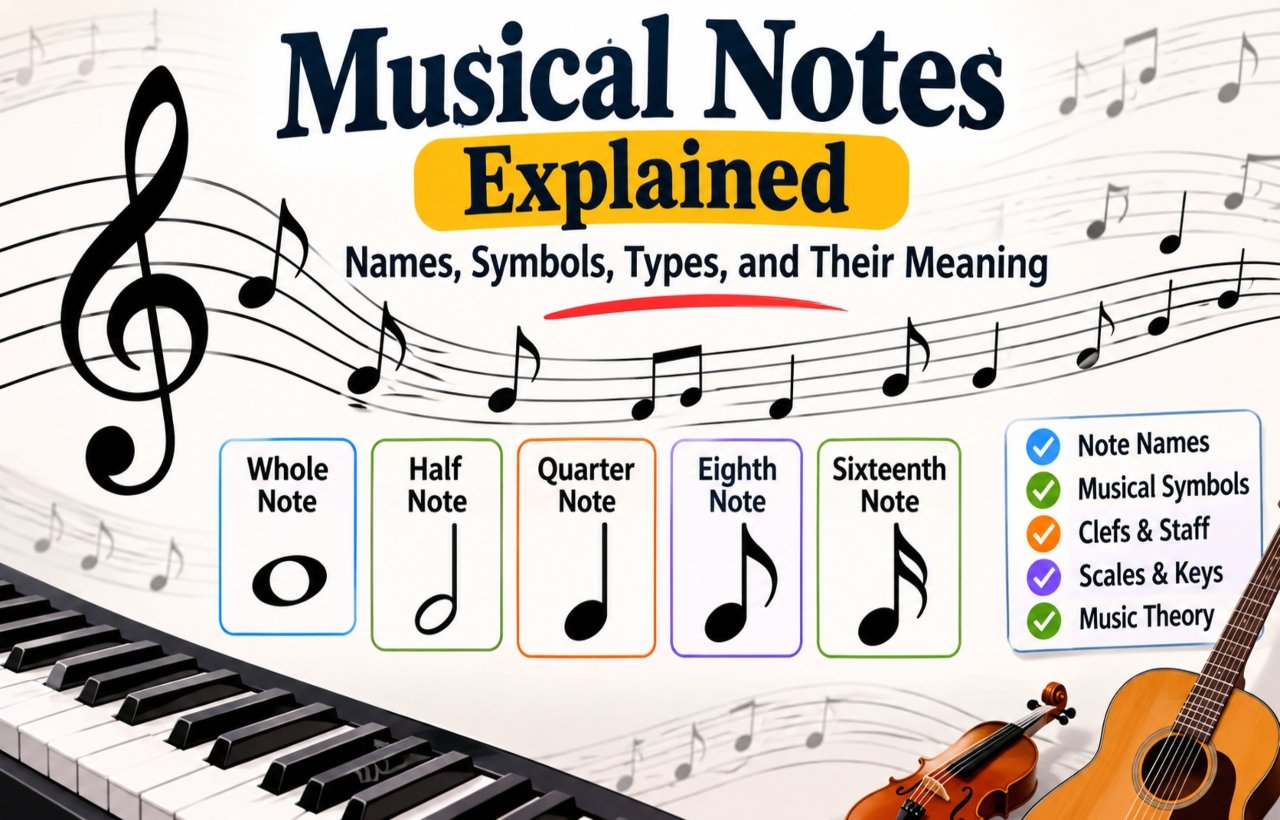

Music is one of the most fascinating parts of human life. Whether you enjoy listening to pop, rock, jazz, classical, hip-hop, or traditional songs, music has a special way of connecting with people. It can make you smile when you feel sad, give you energy when you feel tired, and bring back memories that you thought you had forgotten. But have you ever wondered how much interesting information exists behind your favorite songs? There are countless fun facts about music that reveal surprising details about its history, science, instruments, and influence on everyday life.
Music is not simply a combination of sounds and lyrics. It is a form of creativity that brings together rhythm, melody, harmony, culture, and emotion. People use music to celebrate important moments, express their feelings, tell stories, and connect with communities. Some songs become famous because of their melodies, while others remain popular because their lyrics communicate something meaningful. Even a simple musical tune can become unforgettable when it connects with a personal experience.
The most exciting thing is that music continues to surprise researchers, musicians, and listeners. From ancient instruments to modern recording technology, every generation has contributed something new to the musical world. The following facts will help you understand why music is so special and why people across different countries and generations continue to enjoy it.
Amazing Facts About Music and the Human Brain
One of the most surprising things about music is how deeply it interacts with the human brain. When you listen to a song, your brain does much more than recognize sounds. It processes rhythm, pitch, melody, expectations, memories, and emotions. Different brain systems work together to help you understand and enjoy what you hear.
Music Can Trigger Powerful Emotions
Have you ever listened to a particular song and suddenly felt happy, emotional, peaceful, or nostalgic? There is a scientific reason behind this experience. Music activates several brain systems associated with emotion, memory, movement, and reward. This explains why a familiar song can remind you of a special person, an unforgettable journey, or an important moment from your childhood.
Another fascinating fact is that music can influence your physical reactions. A fast, energetic song may encourage you to move, dance, or exercise, while a slower melody may help you feel relaxed. Researchers continue to investigate these connections because music can influence both psychological experiences and physical activities.
Your Brain Predicts What Comes Next
Your brain constantly tries to predict what will happen next when you listen to music. If a familiar song follows an expected melody, you may feel satisfied because your brain recognizes the pattern. However, when a musician introduces an unexpected note or rhythm, it can make the music more exciting.
This combination of expectation and surprise is one reason people enjoy complicated melodies and creative musical arrangements. According to research published in Nature Reviews Neuroscience, music perception involves prediction, emotion, action, and learning. In other words, your brain actively participates in the musical experience instead of simply receiving sounds.
Fun Facts About Music History
Music has existed for thousands of years, long before modern recording studios, smartphones, and streaming services. Ancient communities used singing, percussion, and handmade instruments for celebrations, communication, storytelling, and cultural ceremonies. Although nobody knows exactly when humans first began making music, archaeological discoveries show that musical instruments have a remarkably ancient history.
One interesting fact is that musical traditions have developed independently across different societies. Ancient civilizations created their own instruments, scales, rhythms, and musical styles. Over time, trade, migration, cultural exchange, and technology helped musical traditions influence one another.
Music has also changed dramatically throughout history. Early musical performances depended on live instruments and human voices. Later, written musical notation helped musicians preserve and share compositions. The invention of recording technology introduced another major change because people could listen to performances without attending them in person.
Today, music travels around the world within seconds. A song recorded in one country can become popular internationally through digital platforms. This incredible journey shows how music continues to evolve while maintaining its connection to human creativity.
Music Is Older Than Written History
One remarkable historical fact is that music existed long before people developed modern writing systems. Archaeologists have discovered ancient flutes made from animal bones, demonstrating that prehistoric humans created musical instruments thousands of years ago.
These discoveries suggest that early humans understood how to produce organized sounds using natural materials. They could create different pitches and rhythms long before modern instruments existed. Imagine hearing music played by someone living thousands of years ago!
Musical Traditions Exist Across Cultures
Music appears in every society studied by researchers, although musical styles and traditions vary considerably. Some cultures emphasize percussion, while others focus on vocal performance, string instruments, or complex melodic structures.
Research published in Science examined musical behavior across different societies and found that music is associated with activities such as dancing, infant care, healing, and expressions of love.
This demonstrates that music is not limited to entertainment. It has played important social and cultural roles throughout human history.
Interesting Facts About Musical Instruments
Musical instruments are among the most creative inventions in human history. They transform physical movement, air pressure, vibrating strings, and electronic signals into sounds that people recognize as music. Every instrument has its own personality, sound, and playing technique.
The piano, guitar, violin, drums, flute, and saxophone are familiar examples, but thousands of other instruments exist around the world. Some are designed for powerful performances, while others produce soft sounds suitable for peaceful musical arrangements.
One interesting fact about instruments is that musicians can create different sounds using the same instrument. Their technique, playing speed, pressure, and musical expression can completely change the result. A skilled guitarist, for example, can produce gentle melodies, powerful rock sounds, or complicated rhythmic patterns using one instrument.
The Piano Has an Incredible Number of Parts
A modern acoustic piano is a complex musical instrument containing thousands of individual components. Its internal mechanism includes strings, hammers, keys, pedals, and other carefully designed parts.
When you press a piano key, a mechanical action causes a hammer to strike the corresponding strings. These strings vibrate and produce sound, which is amplified by the instrument’s soundboard.
The fascinating part is that a pianist can control volume, timing, and expression through playing technique. This makes the piano suitable for classical compositions, jazz performances, pop songs, film music, and many other styles.
The World’s Oldest Instruments
Ancient flutes are among the oldest known musical instruments discovered by archaeologists. Some prehistoric examples were made from bird bones and mammoth ivory.
These instruments reveal that humans developed sophisticated ways of producing musical sounds thousands of years ago. They also remind us that creativity and musical expression are deeply connected to human history.
Surprising Facts About Famous Songs
Famous songs often have interesting stories behind their creation. Sometimes a song becomes popular because of its lyrics, while other times its melody, performance, or cultural importance makes it unforgettable. Behind many successful recordings are hours of practice, songwriting, experimentation, and collaboration.
Another interesting fact is that a song does not always become successful immediately after its release. Some recordings take time to attract attention, while others become popular because they appear in movies, television programs, advertisements, or social media videos.
Music can also introduce listeners to unfamiliar cultures and historical periods. For example, classic rock songs can help younger audiences explore the musical styles of previous generations. Similarly, old jazz recordings continue to influence modern musicians.
Here are some interesting observations about famous songs:
- A memorable chorus can help listeners recognize a song after hearing only a few seconds.
- Movie soundtracks can introduce songs to audiences who might never discover them otherwise.
- A song can become popular again decades after its original release.
- Instrumental music can communicate emotions without using lyrics.
- Live performances sometimes produce different musical arrangements from studio recordings.
One particularly interesting aspect of songwriting is repetition. Repeating a memorable melody or chorus can make a song easier to recognize and remember. However, successful songwriting also depends on originality, emotional expression, and musical arrangement.
Fun Facts About Different Music Genres
Music comes in many styles, and each genre has its own history, characteristics, and cultural influence. Some genres focus on powerful instruments, while others emphasize storytelling, improvisation, dance rhythms, or emotional vocals.
Understanding different genres makes listening more enjoyable because you begin to recognize how musicians use instruments, rhythm, and melody to create distinctive sounds.
Rock Music
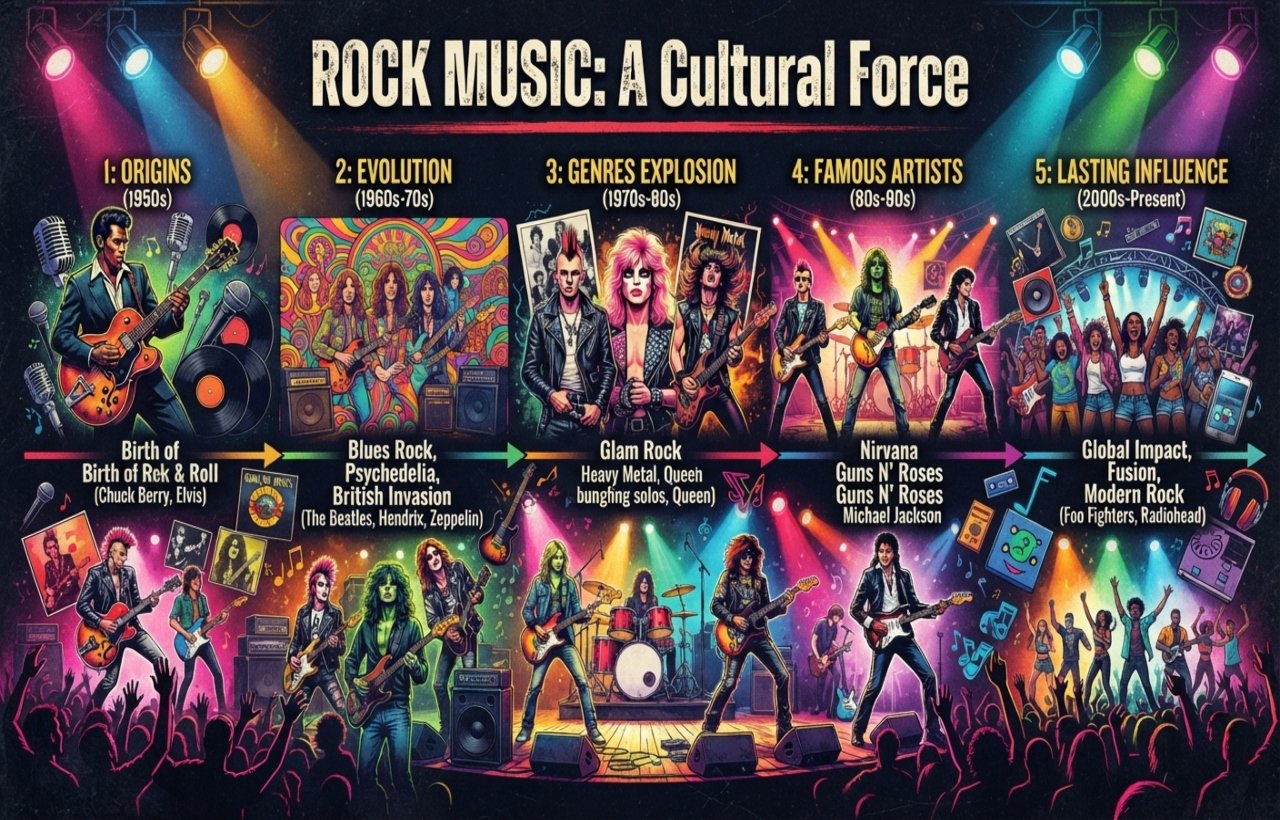
Rock music is famous for its energetic performances, electric guitars, drums, bass guitars, and powerful vocals. It developed through several musical influences, including blues, country, and rhythm and blues.
One fascinating fact about rock music is that the electric guitar became one of the most recognizable instruments in modern popular culture. Guitarists introduced innovative playing techniques, including distortion, feedback, and expressive solos.
Rock music also developed numerous subgenres, including alternative rock, hard rock, punk rock, progressive rock, and heavy metal. Each style offers a different musical experience.
Jazz and Classical Music
Jazz is particularly interesting because improvisation plays an important role in many jazz performances. Musicians can create new melodies during a performance instead of following every note exactly as written.
Jazz also introduced influential musical techniques involving syncopation, complex harmonies, and creative instrumental conversations.
Classical music, meanwhile, includes a wide range of compositions developed across different historical periods. Orchestras may combine violins, cellos, flutes, clarinets, trumpets, percussion, and many other instruments to create rich musical arrangements.
Both genres have influenced countless modern musicians. Their techniques can be heard in film soundtracks, pop recordings, video games, and contemporary instrumental music.
Strange and Unexpected Facts About Music
Some of the most interesting musical facts are also the most unexpected. Music is full of unusual instruments, surprising sounds, creative performances, and scientific discoveries.
For example, musicians can produce music using everyday objects. Glass bottles, metal containers, wooden surfaces, and even kitchen utensils can create different pitches and rhythms. This shows that musical creativity does not always require expensive equipment.
Another fascinating fact is that silence can be an important part of music. A pause between notes can build suspense, emphasize emotion, or make the next musical moment more powerful. Great musicians understand that what they do not play can sometimes be just as important as what they play.
Here are more surprising observations:
- Music can be created without traditional instruments.
- A familiar melody may be recognized even when played using a completely different instrument.
- Some musical performances combine singing with dancing and storytelling.
- Silence and pauses help shape musical rhythm.
- Musicians sometimes use unusual sounds to create original recordings.
- A song can become recognizable through only its opening notes.
Another interesting subject is musical memory. People sometimes remember melodies even when they struggle to recall the names of the songs. This is one reason certain tunes remain in people’s minds for years.
How Music Influences Your Mood
Music can have a powerful influence on how people feel. Many listeners choose different songs depending on their mood, activity, or surroundings. Someone preparing for a workout might prefer energetic rock or electronic music, while another person studying might choose calm instrumental tracks.
Music can also help people express emotions that are difficult to communicate through ordinary conversation. A sad song may provide comfort during a difficult period, while an uplifting melody can create a sense of motivation and positivity.
Scientific research suggests that music engages brain systems associated with emotion, movement, and reward. Studies have also explored music-based interventions for sleep quality, rehabilitation, and emotional well-being.
However, music does not affect everyone in exactly the same way. A song that makes one person feel relaxed may remind another person of a stressful experience. Personal memories, culture, musical preferences, and individual experiences all influence how people respond to sounds.
This is why choosing the right music can make everyday activities more enjoyable. Whether you are travelling, exercising, relaxing, or spending time with friends, the right playlist can help create a memorable experience.
Interesting Facts About Singing and Musicians
Singing is one of the simplest and oldest forms of musical expression. Unlike many instruments, the human voice is naturally available to almost everyone. People sing professionally, socially, religiously, and simply for enjoyment.
One interesting fact is that singing involves several physical systems working together. Your lungs provide airflow, your vocal folds produce vibrations, and your mouth and throat help shape the sounds into recognizable words and notes.
Professional singers spend years developing their vocal techniques. They practise breathing, pitch control, rhythm, pronunciation, and vocal expression. Even experienced performers must take care of their voices to maintain consistent performance quality.
Musicians also develop skills through regular practice. Learning an instrument can involve coordination, listening, memory, timing, and concentration. Research has found associations between musical training and changes in certain brain structures and functions.
Another surprising thing about musicians is that they do not all need to read traditional musical notation. Some musicians learn by listening, copying sounds, experimenting, and developing their own playing styles.
This diversity makes the musical world exciting. Different musicians follow different creative processes, but they all contribute to the endless development of music.
Technology Has Changed the Music Industry
Technology has completely transformed how music is created, recorded, distributed, and enjoyed. In the past, listeners often needed physical records, cassette tapes, or CDs to enjoy their favorite recordings. Today, digital streaming platforms allow people to access enormous music libraries through internet-connected devices.
Modern recording software has also made music production more accessible. Independent musicians can record vocals, arrange instruments, edit sound, and create professional-style recordings using computers and digital equipment.
Artificial intelligence is introducing additional possibilities. Some tools can help musicians experiment with melodies, organize recordings, improve production workflows, and explore new sounds. However, creativity, musical judgment, and artistic identity remain important parts of successful music production.
Social media has also changed how songs become popular. Short video clips, online challenges, and user-generated content can introduce recordings to millions of listeners. A song that was previously unknown can suddenly attract worldwide attention.
Technology has made music more accessible than ever before, but it has also created new challenges involving copyright, artist compensation, and the protection of original creative work.
Why Music Connects People Around the World
Music is a powerful way to connect people who speak different languages and come from different backgrounds. You do not always need to understand the lyrics to enjoy a melody, recognize a rhythm, or appreciate a musical performance.
People attend concerts, festivals, weddings, cultural celebrations, and community events because music creates shared experiences. Singing together, dancing, and enjoying performances can help individuals feel connected to others.
Music also helps preserve cultural identity. Traditional songs often communicate stories, historical experiences, beliefs, and community values. Through music, younger generations can learn about the traditions of their families and societies.
In the modern world, international music has become easier to discover. Listeners can explore Pakistani music, Korean pop, American rock, Indian classical music, African rhythms, Latin music, and countless other styles without travelling to another country.
The most beautiful thing about music is that it allows people to appreciate creativity beyond geographical and linguistic boundaries. A meaningful melody can bring strangers together and create memories that last for years.
Conclusion
Music is much more than entertainment. It is an important part of human creativity, history, culture, science, and emotional expression. From ancient bone flutes to modern digital recording studios, music has continued to evolve while maintaining its ability to connect people.
These fun facts about music show how fascinating the musical world can be. Music interacts with the brain, influences emotions, inspires creativity, and brings different communities together. It also provides endless opportunities to discover new instruments, genres, artists, and traditions.
Whether you enjoy listening to rock, jazz, pop, classical, or traditional songs, there is always something new to learn. The next time you listen to your favorite song, pay attention to its rhythm, melody, instruments, and emotional impact. You might discover something you never noticed before!
Frequently Asked Questions (FAQs)
1. What are some interesting fun facts about music?
Some interesting facts include that music engages several brain systems, ancient humans created musical instruments thousands of years ago, jazz often involves improvisation, and music exists across every society studied by researchers.
2. Why does music make us feel happy?
Music can activate brain systems involved in emotion and reward. Familiar melodies, enjoyable rhythms, and personal memories can contribute to positive feelings and emotional experiences.
3. What is the oldest known musical instrument?
Some of the oldest known instruments are prehistoric flutes made from bird bones and mammoth ivory. Archaeological discoveries suggest that humans were making musical instruments thousands of years ago.
4. Can music improve memory and concentration?
Music interacts with brain systems involved in attention, learning, and memory. However, its effects depend on the individual, the task, and the type of music being played. Instrumental music may be helpful for some people, while others concentrate better in silence.
5. Why is music important in everyday life?
Music provides entertainment, supports cultural traditions, encourages creativity, expresses emotions, and creates shared experiences. People use it during celebrations, exercise, relaxation, social activities, and many other everyday situations.